


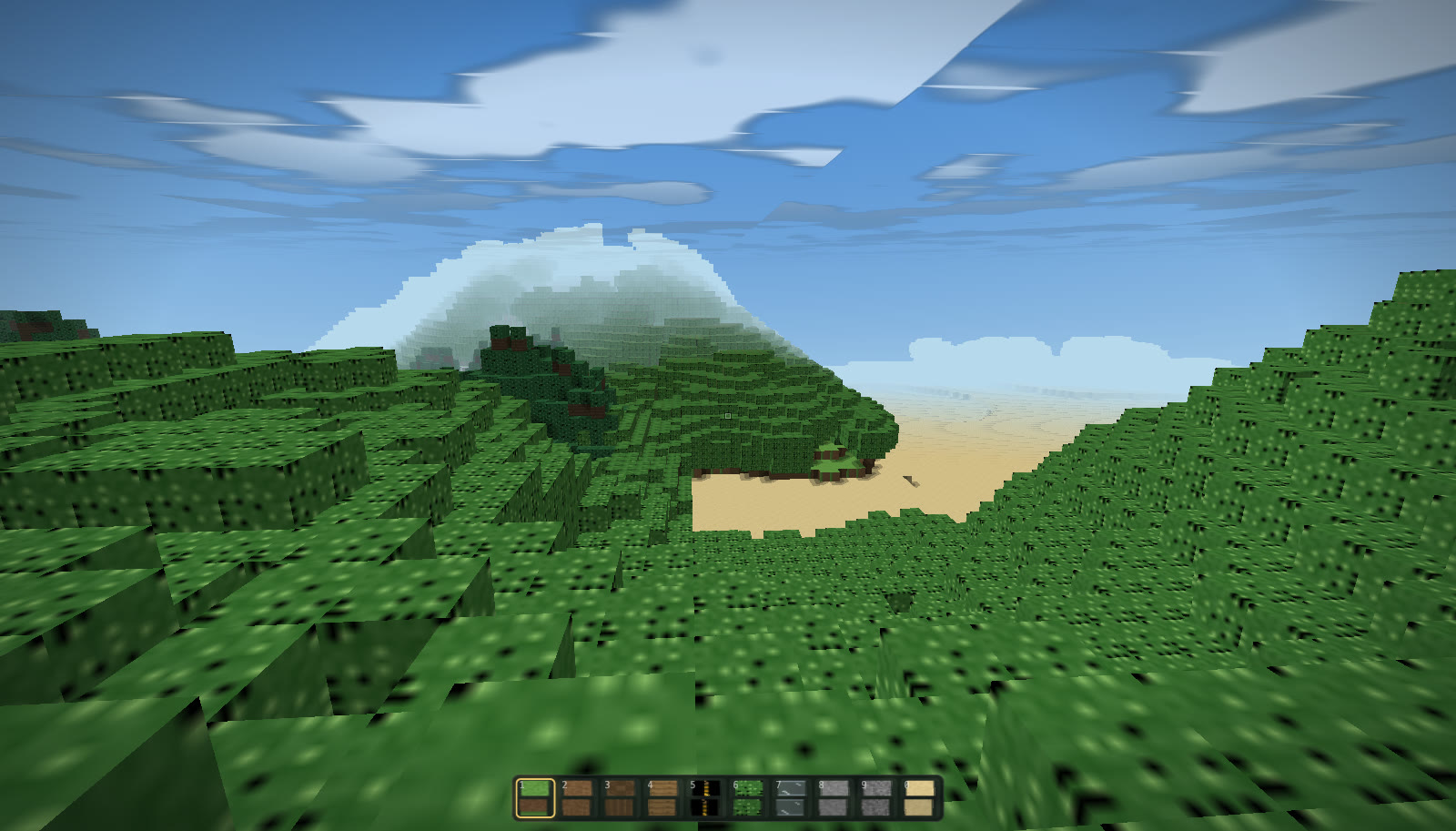
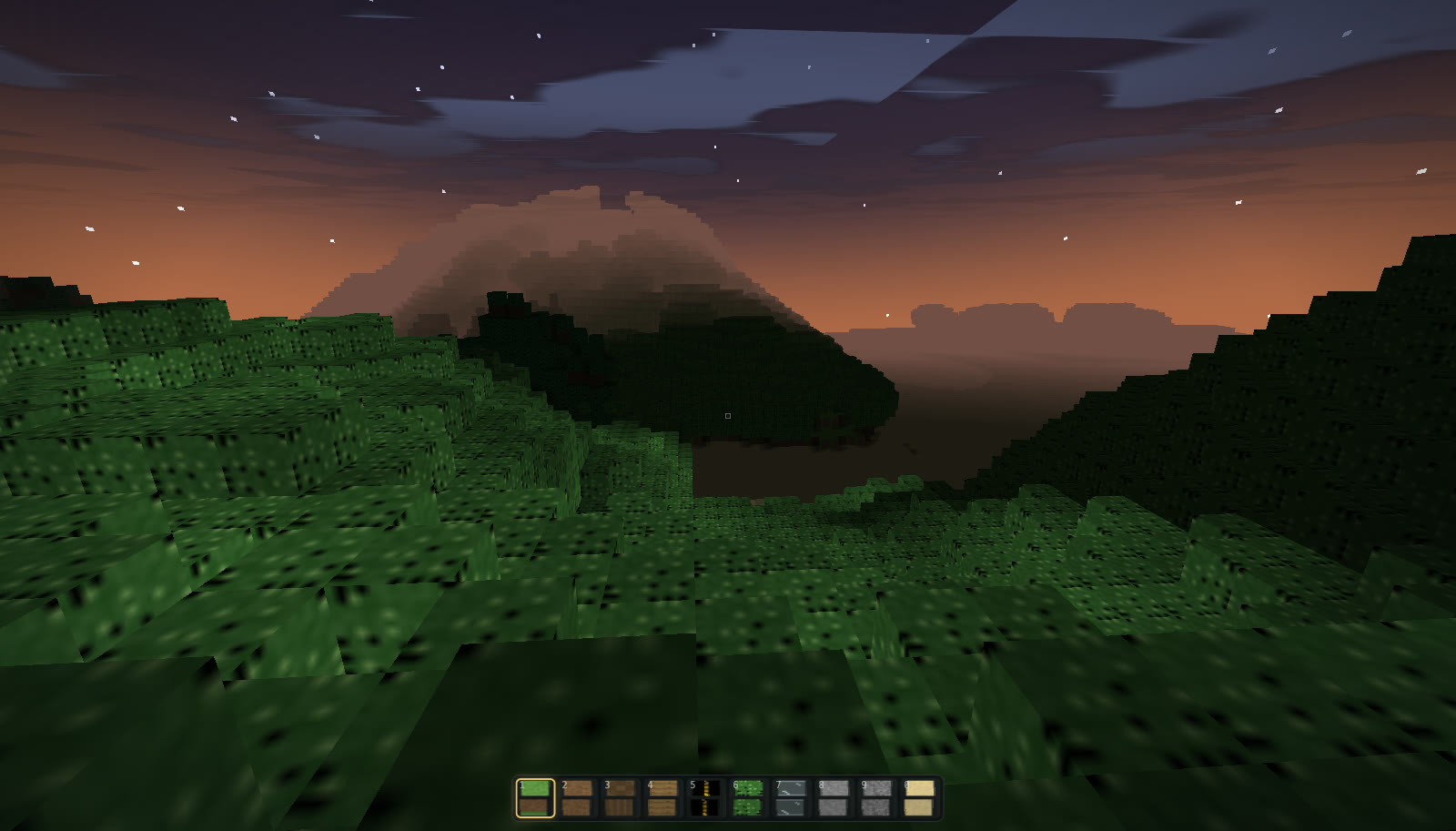
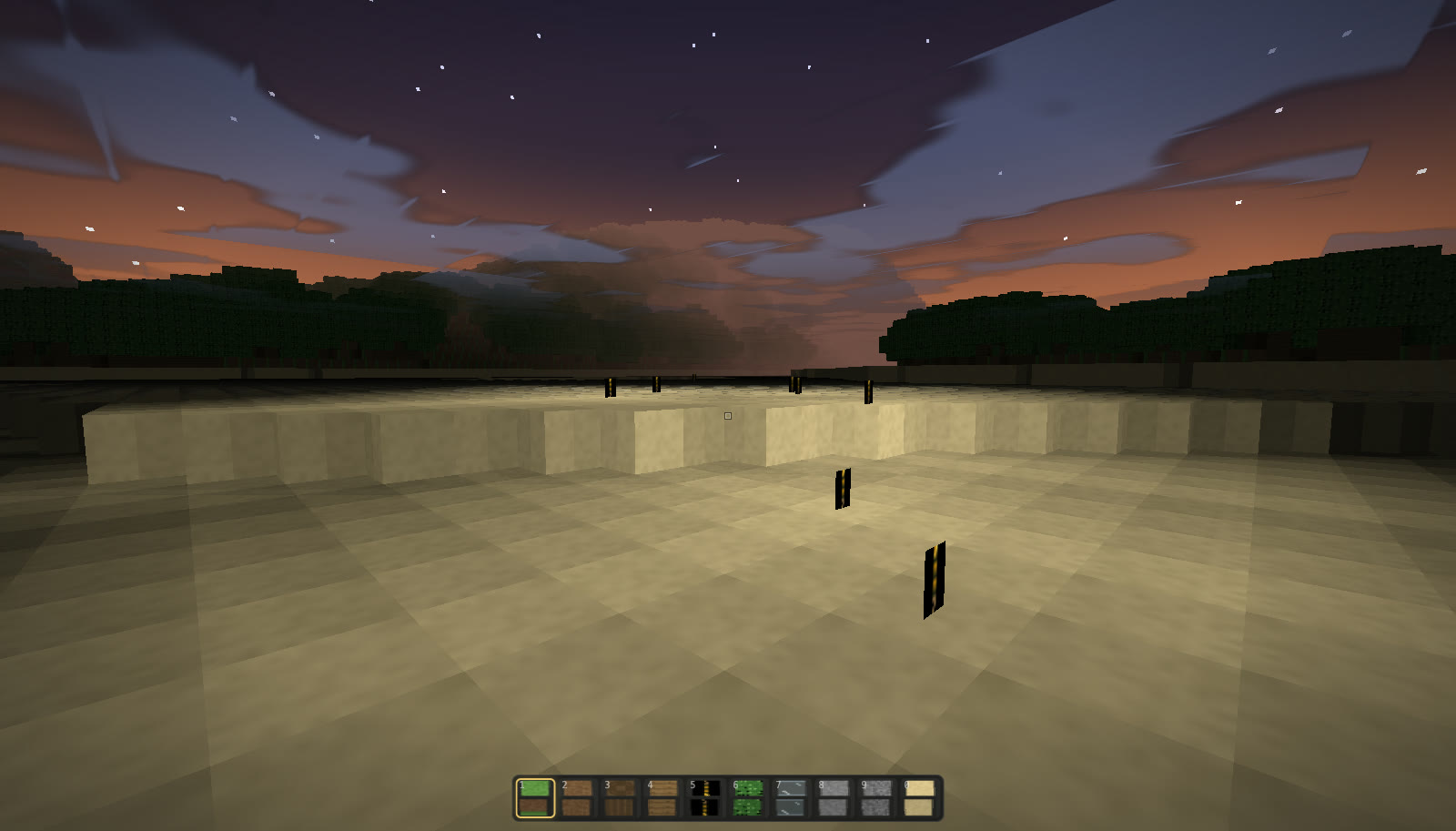
A voxel world is a lighting problem wearing a terrain costume. Sunlight and torch light flood cell by cell through 16x80x16 chunks and have to stay continuous across every border, and one wrong read ruins it: an early build sampled light from each block's own cell instead of the cell in front of the face, and the whole world rendered dim. Headless GPUs would not draw the scene at all, so it could not be verified by screenshot.
The pure core, worldgen, lighting, meshing, collision, lives in its own script block with zero DOM access, so a Node harness runs the exact same bytes and asserts 37 invariants: determinism, light-border continuity, no phantom light, save roundtrips. The shell wraps it in WebGL2, synthesized audio, and touch controls. Claude wrote the code against a four-critic design dossier; the playtesting eye that caught the dim world is mine.
2,688 lines, 126 KB, opens straight from the file with no server and no install. Worlds are deterministic from a text seed, edits save to localStorage as compressed diffs, and it runs on a phone with a virtual joystick.